Welcome to Our Website!
Add your email below to get updates!
Mitigating Methane Emissions: A Key to Climate Action
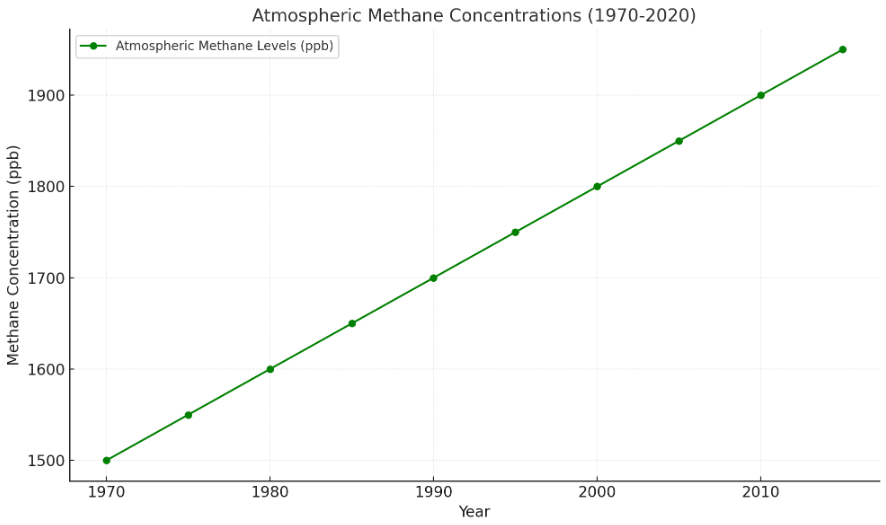
Methane (CH4) is a potent greenhouse gas with a warming potential significantly greater than that of carbon dioxide. It is primarily released during agricultural practices, waste management, and fossil fuel production, making it a crucial target for climate action.
In agriculture, methane is emitted during enteric fermentation in ruminant animals and from organic waste in landfills. Strategies to reduce methane emissions in these sectors include improving livestock management practices and enhancing waste treatment processes.
Fossil fuel production, particularly natural gas extraction, is another major source of methane emissions. Minimising leaks during extraction and transport, along with transitioning to renewable energy sources, can significantly reduce methane emissions.
Key Messages
- High Warming Potential Methane (CH₄) is far more effective than carbon dioxide
- Major Emission Sources Primary sources include agricultural practices, waste management
- Agricultural Emissions Methane is released during livestock digestion (enteric fermentation)
- Fossil Fuel Emissions Natural gas extraction and transport are significant contributors
- Urgent Mitigation Needed Methane's short atmospheric lifespan means targeted actions